
Introduction
Importing smart locks from China is not simply a matter of comparing a fingerprint-lock price and arranging freight. A smart lock combines mechanical fit, electronic access, radio communication, firmware, an app or cloud platform, batteries, packaging, and market-specific compliance. A sample can look excellent on a desk and still fail when it reaches the buyer's local door, Wi-Fi environment, installation team, or after-sales channel.
For a distributor, project contractor, online retailer, or private-label brand, the safest process is to define the application first, verify the exact configuration second, test representative samples third, and approve mass production only after the specification and inspection standard are frozen. Compliance and landed cost must be reviewed for the destination market rather than copied from another buyer's order.
This guide provides a 12-step procurement workflow. It also identifies the evidence to request at each stage so that a quotation can become a controlled purchase specification.
Short answer: To import smart locks from China, define the door and user requirements, shortlist suppliers with verifiable capabilities, confirm market compliance, test configured samples, freeze a signed specification, run pre-production and pre-shipment checks, and plan installation plus after-sales support before the goods leave the factory.
Step 1: Define the Business Case Before Choosing a Lock
Begin with who will buy or operate the lock. A consumer retail SKU, a villa entrance lock, an outdoor metal-gate lock, and a multi-door rental project do not share the same priority list.
Create a one-page requirements brief containing:
- Buyer type: distributor, retail brand, door fabricator, installer, property operator, or project contractor.
- Destination country and sales channel.
- Application: apartment, villa, exterior gate, office, aluminum-frame door, glass door, or retrofit cylinder.
- Expected order and annual volume, stated as a forecast rather than a promise.
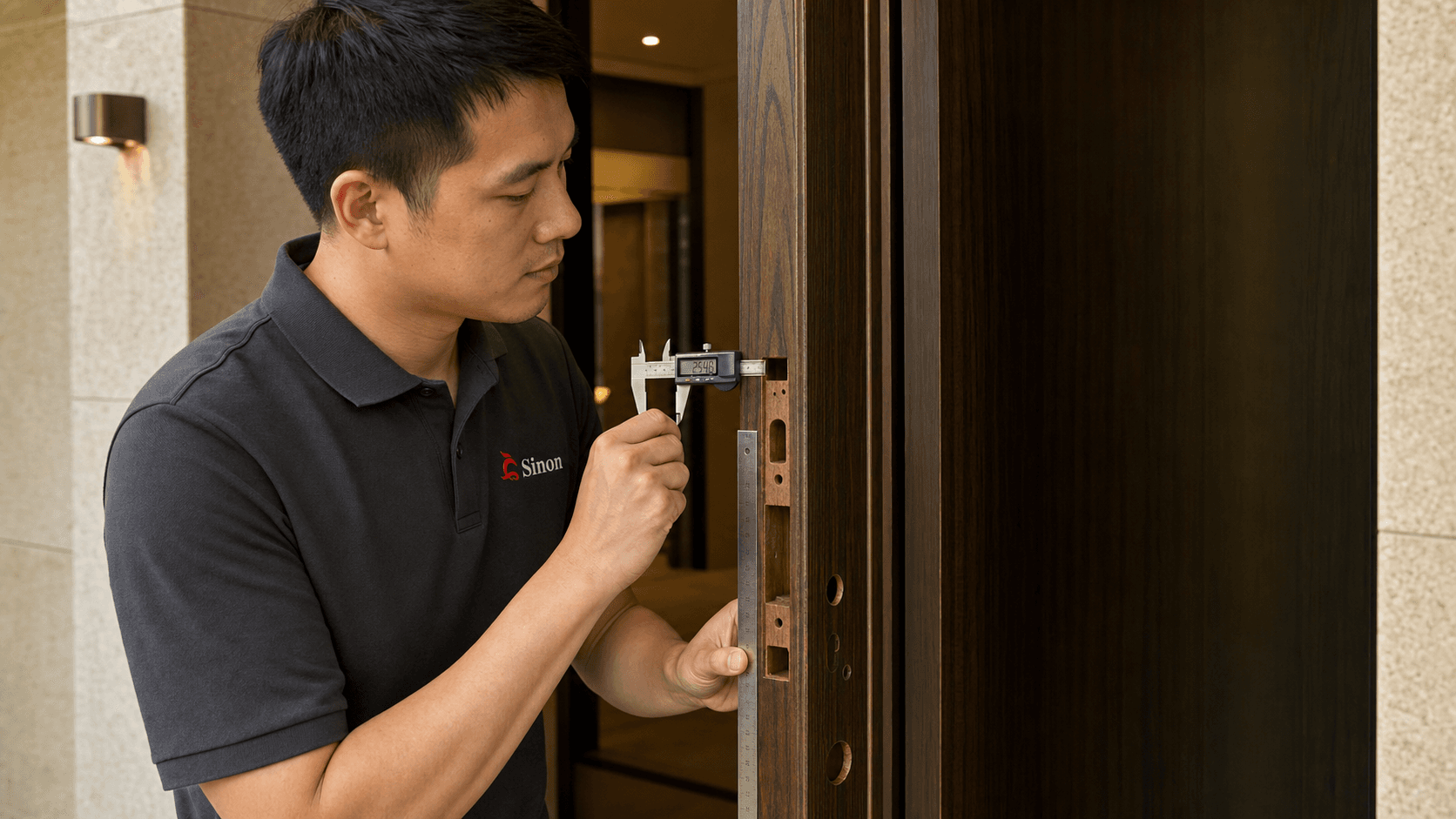
- Door material, thickness, opening direction, existing preparation, and mortise or latch type.
- Required access methods: fingerprint, PIN, card, app, mechanical key, face, camera, or palm vein.
- Preferred platform and connectivity: Bluetooth, Wi-Fi, Zigbee, Matter, Tuya, TTLock, or another approved ecosystem.
- Branding scope: logo method, finish, packaging, manual language, app identity, labels, and accessories.
- Target compliance, warranty, spare-parts, and service expectations.
This document prevents a common sourcing error: requesting “the best price” for products that are not technically comparable.
Step 2: Translate the Use Case into a Configuration Matrix
One model name may cover several versions. A camera version can use a different battery from a fingerprint-only version. Bluetooth remote management may require a gateway, while a Wi-Fi model may connect directly but consume energy differently. A Matter-compatible option must be confirmed for the specific hardware and firmware combination, not assumed from the product family.
Use a matrix with one row per SKU and columns for panel dimensions, material, mortise, door range, access methods, platform, battery, gateway, finish, package, language, included accessories, and required reports. Ask the supplier to mark every field as standard, optional, unavailable, or pending confirmation.
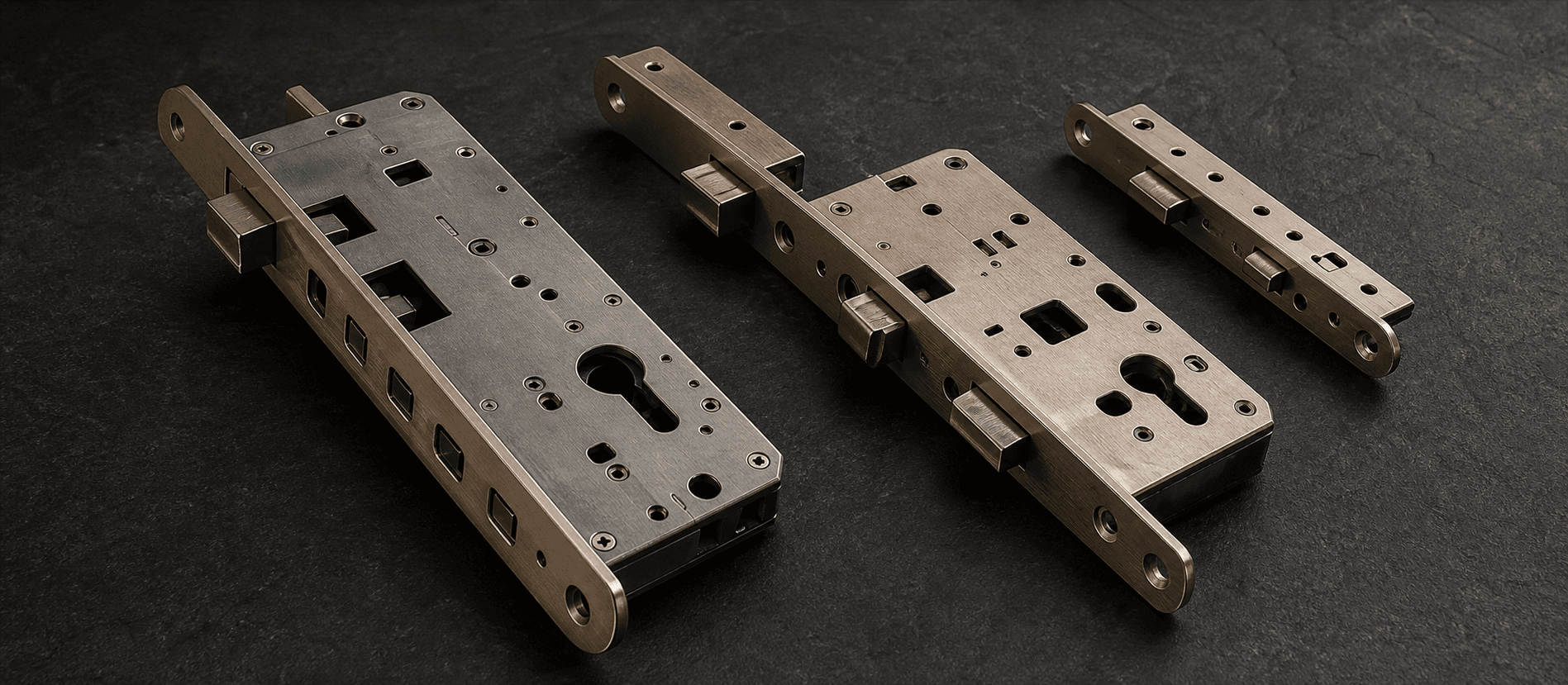
For SINON's current portfolio, for example, the catalogue lists common mortise options such as 3585, 4585, 5050, 5572, 6068, and 6085, plus Tuya, TTLock, Zigbee, Matter, and Apple HomeKit-compatible configurations. These are portfolio-level options. The final quotation must state which combination is available on the selected model.
Step 3: Build a Supplier Shortlist Using Evidence
“Manufacturer,” “factory,” “supplier,” and “trading company” are not quality grades by themselves. What matters is which organization controls product definition, component sourcing, assembly, firmware configuration, quality records, corrective action, and after-sales response.
Ask each candidate for:
- Legal company name and export entity.
- Business address and the address where production or final assembly occurs.
- Product catalogue with consistent model codes.
- A live video review of the assembly, testing, packing, and sample-storage areas when an in-person visit is not possible.
- Quality-control flow and inspection records with confidential customer data removed.
- Copies of relevant reports that can be checked against model, hardware, radio module, and applicant name.
- Firmware, app, gateway, and cloud-platform ownership or authorization details.
- Written warranty, spare-parts, defect handling, and technical-support process.
- Export-market references only where the supplier has permission to share them.
Do not rely on a platform badge, edited production photo, or certificate thumbnail. Verify identifiers with the issuing database or laboratory where possible.
Step 4: Confirm Market Access and Cybersecurity Requirements
The importer is responsible for understanding the rules in the destination market. In the United States, radio-frequency devices may be subject to FCC equipment-authorization and marketing requirements. In the European Economic Area, wireless products may fall within the Radio Equipment Directive and applicable CE-marking obligations. The exact route depends on the product, radio modules, power system, intended use, and jurisdiction. Work with a qualified laboratory, compliance adviser, and customs professional rather than treating a supplier's generic “CE/FCC” statement as legal clearance.
For connected locks, add cybersecurity and privacy questions to the compliance review. NIST's IoT baseline is a useful due-diligence framework: device identification, authorized configuration, data protection, access control for interfaces, secure software updates, cybersecurity-state awareness, and device security. Ask who can update firmware, how access is revoked, where logs are stored, what happens when cloud service is unavailable, and how the buyer can receive vulnerability information.
Useful primary references include the FCC rules on marketing radio-frequency devices, the European Commission's Radio Equipment Directive overview, and the NIST IoT Device Cybersecurity Capability Core Baseline.
Step 5: Request a Quotation That Can Be Audited
A useful quotation identifies the configuration instead of hiding it behind one line. It should state:
- Exact model and version.
- Unit price and Incoterm with named place.
- Included mortise, strike, cylinder, keys, cards, screws, cables, batteries, gateway, and packaging.
- Logo and packaging setup charges.
- Sample price and whether it is refundable.
- Minimum order quantity by finish and version.
- Production lead time after artwork, deposit, and sample approval.
- Carton quantity, gross/net weight, and estimated dimensions.
- Payment milestones.
- Warranty and spare-parts basis.
- Report, labeling, manual, and destination-market requirements.
- Quotation validity and currency.
Compare the total configured cost, not the base lock price. A lower quote can become more expensive after adding the correct mortise, gateway, branded packaging, compliance work, inspection, and replacement stock.
Step 6: Order Samples That Match the Intended Sale Version
The sample should represent the intended platform, mortise, finish, battery, language, and accessories. If two configurations are being considered, test both. Label samples with supplier, model, firmware version, app version, received date, and configuration so test results remain traceable.
Use a real door or a correctly prepared test rig. Bench testing alone cannot reveal panel clearance, cable routing, spindle length, bolt alignment, door-frame interference, or installation time. For a project, include at least one installer and one representative end user in the review.

Step 7: Run a Repeatable Sample Test
A reasonable sample protocol combines mechanical, electronic, environmental, and user tests. The exact cycle count and acceptance threshold should reflect the intended market and contract; do not invent a universal number.
Mechanical and fitment checks
- Confirm door thickness, backset, mortise dimensions, handing, spindle, screw length, panel clearance, and strike alignment.
- Operate the handle, latch, deadbolt, privacy function, and mechanical override repeatedly.
- Inspect for cable pinching, loose connectors, rubbing bolts, uneven panel seating, and fastener loosening.
Access and electronics checks
- Enroll and delete fingerprints, cards, PINs, app users, and any supported biometric profiles.
- Test valid, invalid, expired, and revoked credentials.
- Check low-battery warnings, emergency power, mechanical-key access, restart behavior, time synchronization, and event logs.
- Record response time under realistic Bluetooth, Wi-Fi, or gateway conditions.
- Confirm what works locally when the internet or cloud is unavailable.
Environmental and misuse checks
- For outdoor models, review the actual ingress-protection report and test configuration. An IP label does not prove performance for an untested variant or guarantee resistance to every weather condition.
- Test at the declared temperature and humidity range using appropriate equipment or a qualified laboratory when this is a purchase requirement.
- Check false operation from water on the keypad, dirty fingers, gloves where relevant, direct light for cameras, and repeated incorrect attempts.
Factory testing should produce records tied to model, batch, test equipment, date, result, and operator—not only a video of one lock working once.
Step 8: Freeze the Golden Sample and Product Specification
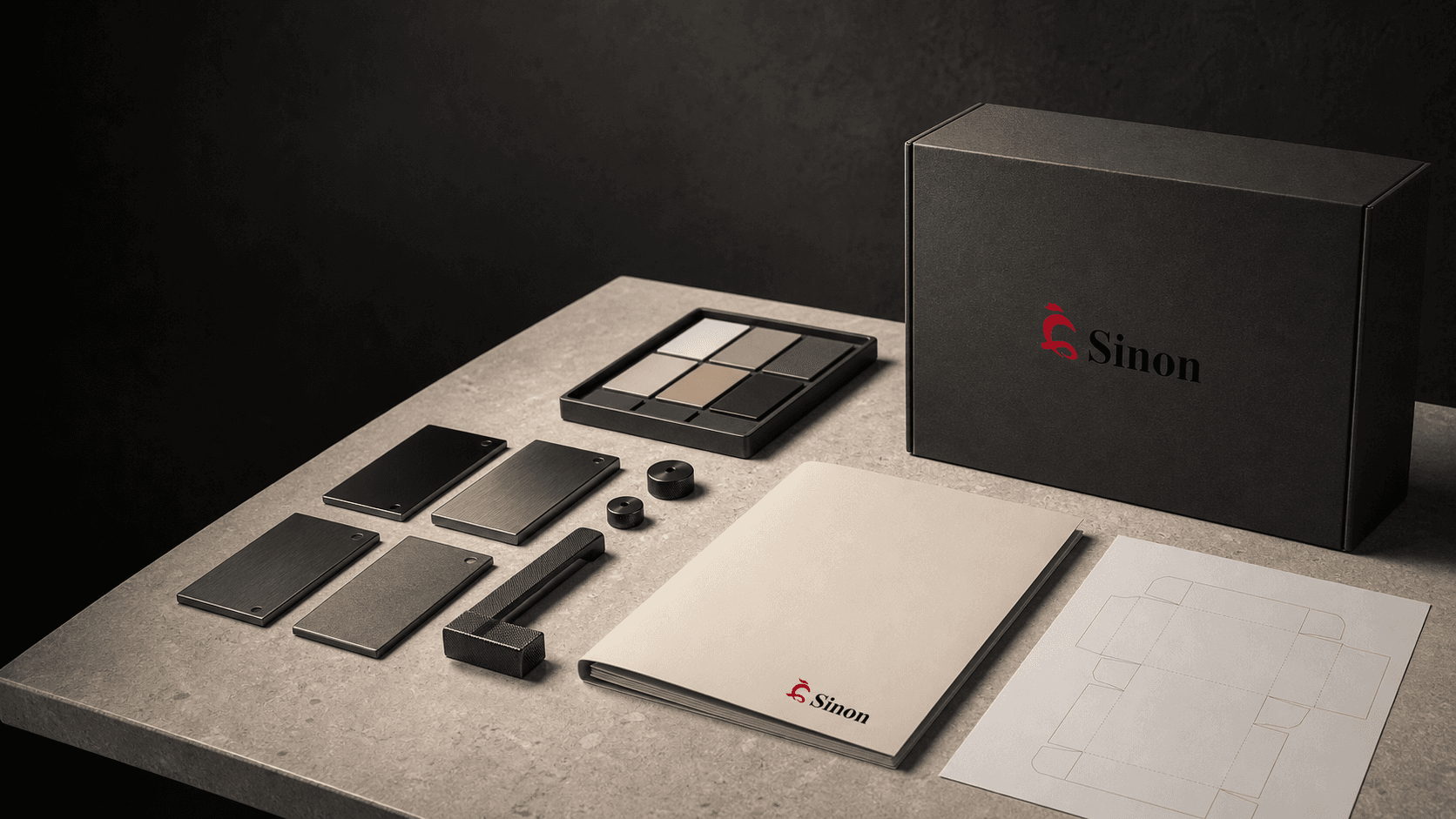
After testing, agree on a golden sample or equivalent approved reference and a signed specification. Capture every feature that can affect cost or function: bill-of-material-critical components, finish standard, logo location, firmware and app configuration, mortise, accessories, labels, carton, manual, and acceptance criteria.
Define change control. The supplier should not replace a radio module, sensor, battery, finish process, cloud configuration, or packaging material without written review when the change could affect performance, certification, or customer experience.
Step 9: Approve Packaging and Installation Preparation
Packaging is part of product quality. A smart lock may be mechanically sound yet generate returns because the screws are mixed, the template is wrong, the QR code opens an outdated app, or the manual does not match the firmware.
Verify:
- Each accessory against the packing list.
- Correct left/right or universal-handing instructions.
- Drilling template scale and measurement units.
- Model, color, radio, and batch identification.
- Scannable app and support links.
- Battery transport requirements where rechargeable lithium batteries are supplied.
- Drop and vibration protection appropriate to the distribution route.
- Installer-facing door-preparation and commissioning steps.
Step 10: Use In-Process and Pre-Shipment Inspection
Inspection does not improve a vague specification; it checks production against an agreed one. For a new supplier or new model, consider reviewing pilot production before the full run and conducting a pre-shipment inspection when the order is substantially complete and packed.
A shipment inspection plan can include:
- Quantity, model, finish, and carton marking.
- Randomly selected visual and dimensional checks.
- Functional tests for each access method included in that SKU.
- App pairing, user enrollment, gateway connection, and log verification on a defined sample.
- Mechanical operation, emergency power, key override, and included accessories.
- Firmware/version traceability.
- Packaging, barcode, manual, label, and carton checks.
- Document review and photographed nonconformities.
Define critical, major, and minor defects before inspection and agree what happens after a failed result: sorting, rework, replacement, reinspection, or shipment hold.
Step 11: Calculate Landed Cost and Control Shipping Documents
Landed cost can include configured product cost, tooling or setup, inspection, laboratory work, inland transport, export handling, freight, insurance, duty, customs fees, broker charges, destination handling, warehousing, and an allowance for spare parts or returns.
Classify the product and declare value using qualified local advice. Rules and fees change. U.S. Customs and Border Protection notes that an importer remains responsible for compliance even when using a customs broker; see CBP's customs broker guidance. Before dispatch, reconcile the purchase order, commercial invoice, packing list, transport document, origin documentation if applicable, and any battery or compliance documents.
Step 12: Plan Receiving Inspection and After-Sales Support
Quality control continues after arrival. Record carton damage, count discrepancies, batch codes, and a receiving sample before stock is distributed. Keep retained samples from the shipment when practical.
Prepare a support pack with installation videos, manuals, FAQ, app commissioning, reset and ownership-transfer instructions, spare parts, escalation contacts, and a process for firmware or cloud incidents. Decide who supports the installer and end user. For private-label products, the customer will contact the brand on the box, not the upstream component supplier.
A Practical Supplier Scorecard
| Evaluation area | What to verify | Suggested weight |
|---|---|---|
| Door and product fit | Door data review, mortise options, drawings, installation support | 20% |
| Product performance | Sample results, test records, failure analysis, consistency | 20% |
| Platform and cybersecurity | Configuration, gateway, account/API, updates, privacy documentation | 15% |
| Compliance readiness | Applicable reports, model traceability, labeling support | 15% |
| Quality system | Incoming, in-process, final inspection, change control | 10% |
| Commercial fit | Configured cost, MOQ, lead time, payment, capacity | 10% |
| After-sales support | Warranty, spares, response path, technical documents | 10% |
Adjust the weights for the project. An outdoor gate program may give more weight to environmental performance; an online retail brand may emphasize installation clarity and return prevention.
FAQ
What is the minimum order quantity for OEM smart locks?
There is no universal MOQ. It varies by model, finish, logo process, packaging, electronic configuration, and supplier. Ask for the MOQ of the exact SKU and separate one-time setup costs from recurring unit cost.
Should I choose Tuya, TTLock, Matter, or a standalone lock before sampling?
Choose the operational requirement first. Define who manages users, whether remote actions are needed, which smart-home integrations matter, and whether a gateway or subscription is acceptable. Then sample the exact supported platform version.
Which certificates do I need?
Requirements depend on destination, radio technology, power system, product claims, channel, and use case. Obtain advice from an accredited laboratory or compliance professional for the target market. Verify that any report applies to the exact shipped configuration.
How many samples should I test?
One sample can demonstrate features but cannot establish production consistency. Use enough samples to cover each intended configuration and installation type, then define batch inspection based on order risk and your quality plan.
Can I use the supplier's freight forwarder?
Yes, but compare scope, Incoterm, insurance, destination charges, document handling, and accountability. The lowest freight quote may exclude costs that appear on arrival.
What information produces a faster smart-lock quotation?
Send the target market, quantity, door material and thickness, opening direction, existing mortise or latch dimensions, access methods, platform, finish, logo/packaging needs, and required compliance documents.
Conclusion
The most reliable import process is evidence-led. Define the application, convert it into a controlled configuration, test the real installation, verify market requirements, approve production against a signed reference, and inspect the shipment before release. This approach may take longer than choosing from a price list, but it reduces the larger costs of incompatible stock, app confusion, noncompliant radio hardware, installation failures, and avoidable returns.
Evidence reviewed
This guide combines the current SINON portfolio context with the primary sources below. Regulations, platform capabilities and model configurations change; verify the exact SKU and destination-market requirements before purchase. AI images on this page are illustrations, not documentary proof of testing, certification or customer projects.
- Marketing of radio-frequency devicesU.S. Federal Communications Commission · Checked August 4, 2026
- Harmonised standards: radio equipmentEuropean Commission · Checked August 4, 2026
- IoT Device Cybersecurity Capability Core BaselineNIST · Checked August 4, 2026
- Customs broker guidanceU.S. Customs and Border Protection · Checked August 4, 2026
- AI features and your websiteGoogle Search Central · Checked August 4, 2026
- Top ways to ensure your content performs well in Google's AI experiencesGoogle Search Central · Checked August 4, 2026